
Get Healthy!
- Posted February 11, 2026
Minimally Invasive Surgery Restores Active Dad's Mobility
Stretching at the gym, AJ Starsiak felt an alarming pop in his back.
Starsiak shrugged it off. An active 39-year-old father of two who plays softball and ice hockey, he was no stranger to minor injuries.
But over the next few months, his hips stiffened and he began to lose sensation and muscle mass in his leg.
The breaking point came during a business trip.
“I could not walk from one gate to the next at the airport and ended up having a breakdown, crying because I was in so much pain,” Starsiak, who lives in Orange County, California, said in a news release.
An MRI eventually revealed the cause of Starsiak’s decline – a 2-centimeter cyst lodged on the front side of a nerve, tucked beneath a joint in his spine.
It was a terrible place for the cyst to be, making surgery difficult.
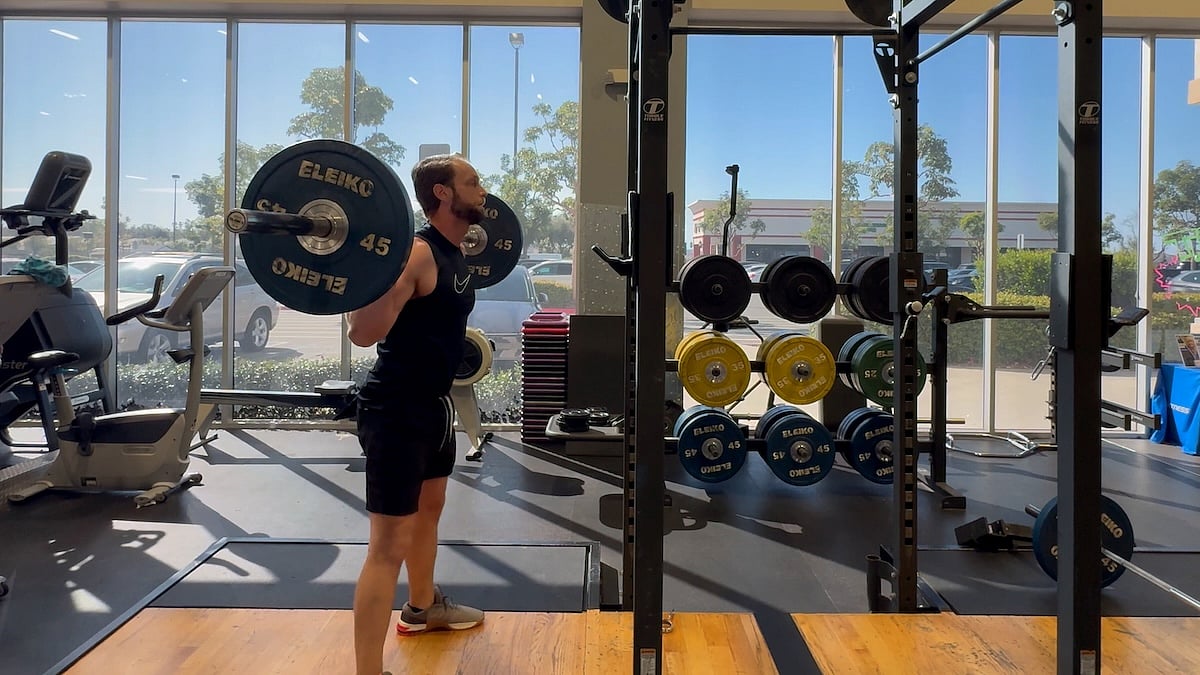
But these days Starsiak is hale and hearty, back to playing sports, off-roading and lifting weights.
That’s thanks to a minimally invasive surgery that allowed doctors to remove the cyst without cutting into muscle, removing a spinal joint or injuring the nerve.
Without the technique, surgeons would have had to remove a spinal joint and fuse the vertebrae with rods and screws, said Starsiak’s physician, Dr. Corey Walker, an assistant professor of neurosurgery and orthopedics at Cedars-Sinai Medical Center in Los Angeles, California.
“That would have been a life-altering operation for someone his age,” Walker said in a news release. “Fusion puts added stress on surrounding joints and can lead to future surgeries.”
Starsiak was well-aware of the stakes involved in the traditional surgical approach.
“I was worried a fusion would significantly hamper -- if not end -- my ability to play sports and lift weights,” he said.
The cyst was squeezing nerves against Starsiak’s spinal canal, interfering with his brain’s ability to communicate with his leg. That’s why he was gradually losing, strength, sensation and coordination with the leg.
During the minimally invasive surgery, Walker used an endoscope -- a small tube with a camera attached -- to access the cyst and locate the affected nerve.
When Starsiak woke after the procedure, he felt immediate relief -- as if a rock had been removed from his back.
Starsiak spent eight weeks in recovery, focusing on restoring mobility and strength in his hips, legs and back.
Despite his full recovery, Starsiak says the experience changed his mindset. Before, he measured success largely by career advancement.
“The second you lose your health, you realize none of the other things really matter,” Starsiak said. “You can’t enjoy success if you’re not healthy.”
More information
Johns Hopkins Medicine has more on minimally invasive spine surgery.
SOURCE: Cedars-Sinai Medical Center, news release, Feb. 5, 2026
